
How to Personalize a Wooden Casket Respectfully

Last Updated: October 23, 2026
Quick Summary
Personalizing a wooden casket respectfully means adding details that reflect the person without turning the service into a craft project, so a grandchild looks at it and thinks, "That's Grandpa." Start with family agreement, confirm religious requirements, and choose reversible items like photos or cards when the family is split.
Engraving a name, dates, and a short line is permanent, dignified, and hard to get wrong.
Pick one small, readable symbol; two or three compete with each other and look cluttered.
Items placed inside a casket are not returned, so avoid anything of high value.
Metal, glass, and batteries are usually not allowed in a casket intended for cremation.
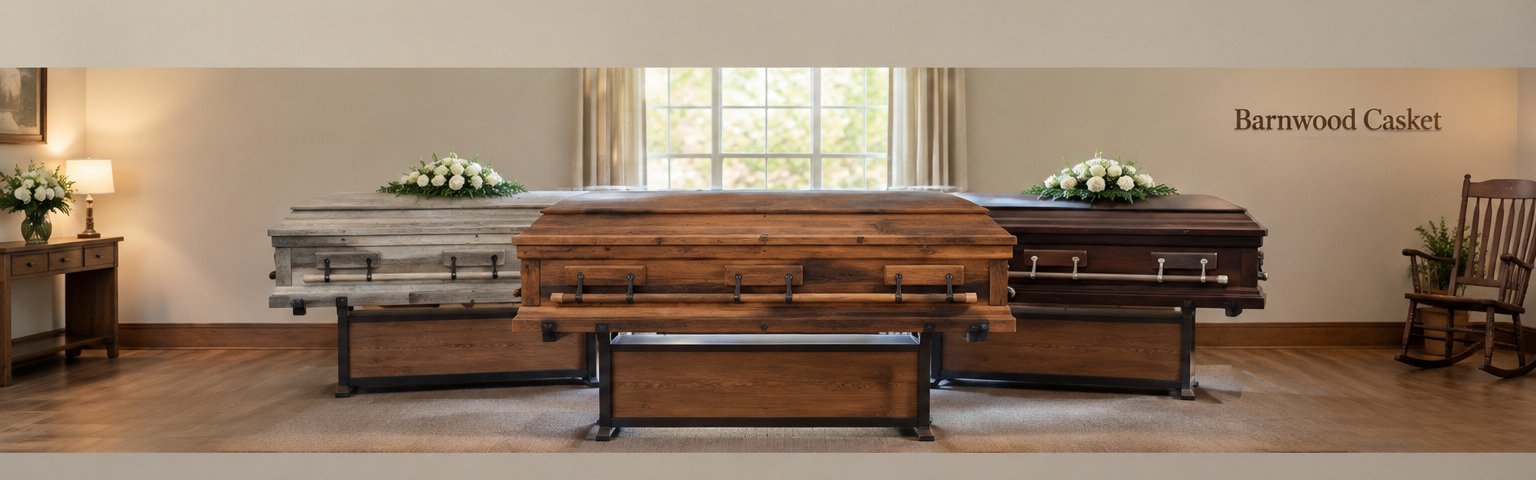
Barnwood Casket offers more than 70 styles, handcrafted without power tools and delivered in our own vehicles.
Table of Contents
Why Personalizing a Wooden Casket Matters
Start with Family Agreement and Cultural Sensitivity
A five-step consent framework
Handling disagreement without delay
Timing checkpoints
Wooden Casket Personalization Ideas: From Simple to Bespoke
Engravings, Names, Dates, and Personal Messages
Photographs and Meaningful Images
Hobbies, Interests, and Personal Symbols
What to Write on a Casket: Inscriptions That Last
What to Put on a Casket Instead of Flowers
Meaningful Items to Place in a Casket
What is generally safe
What causes problems
Check with the funeral director first
A note on adhesives and attachments
Practical Limits and Timing: What Funeral Directors Need to Know
Conclusion
Frequently Asked Questions
Why Personalizing a Wooden Casket Matters
A wooden casket is more than a container.
Personalizing a wooden casket respectfully means adding details that reflect the person without turning the service into a craft project.
The tension most guides skip: personalization is emotional but also logistical.
Below, we walk through personalizing a wooden casket step by step, what works, what causes problems, and how to keep the process calm.
Key Takeaway The best personalization is the kind the family notices without being told. Subtle and specific beats loud and generic every time.
Start with Family Agreement and Cultural Sensitivity
Before anyone drills, glues, or engraves, get the family aligned. This is the step most people rush and the one that causes the most regret. Respectful personalization is not about the most creative idea, it is about the idea the family can live with afterward.
A five-step consent framework
Conflict is avoided when the family follows a simple sequence rather than jumping straight to design ideas:
Identify the decision-maker. One person usually coordinates with the funeral director. That person should gather input, not make solo calls. Confirm early who has legal authority and who the family treats as the emotional anchor.
Ask what the deceased wanted. If the person left instructions, a pre-need file, a letter, a verbal comment, start there. If not, ask those who knew them best what they would have found appropriate, not funny or clever.
Surface religious and cultural requirements before ideas. Some traditions have clear expectations about what may be placed in or on a casket and how it should be handled. Ask the family's clergy or the funeral director first; a symbol meaningful in one tradition can be inappropriate in another.
Agree on a shortlist, not a single idea. Bring two or three options. It is easier to choose than to invent, and a shortlist keeps the conversation from becoming a debate about taste.
Put one person in charge of the final call. Group decisions stall. One trusted voice, usually the coordinating family member, keeps the timeline moving.
Handling disagreement without delay
Siblings often disagree about a symbol, a message, or whether to personalize at all. The respectful move is not to force consensus but to choose the reversible option: a framed photograph, handwritten card, or draped blanket can be removed or changed, while engraving and inlay cannot.
If the disagreement is about religious practice, defer to the family's clergy or the funeral director rather than the loudest voice in the room. If it is about cost, remember that the most meaningful personalization is often the least expensive, a single line of text, a photo from a good year, a child's drawing.
Timing checkpoints
Personalization has to fit around viewing, visitation, and the service. Work backward from the first viewing:
At the arrangement meeting: raise personalization and confirm what the casket can accept.
Before the casket is delivered or finished: finalize any engraving, inlay, or interior work, since these cannot be added later.
The day before the service: place only reversible items, photos, cards, blankets, small keepsakes.
If the family is still debating a permanent design the night before, simplify rather than delay. A reversible tribute placed with care reads as respectful; a rushed engraving does not.
Key Takeaway Respectful personalization is a decision process, not a design contest. Get the consent, timing, and reversibility right, and the tribute takes care of itself.
Wooden Casket Personalization Ideas: From Simple to Bespoke
Options range from a single engraved name to a fully custom design. The right choice depends on budget, timeline, and family involvement.

Here is how the main options compare:
Idea | Effort | Cost Level | Reversible? | Best For |
Engraved name and dates | Low | Modest | No | Every family |
Handwritten message card | Low | Minimal | Yes | Tight timelines |
Framed photograph | Low | Minimal | Yes | Viewing services |
Applied wood inlay | Medium | Higher | No | A standout tribute |
Custom fabric lining | Medium | Varies | No | Interior warmth |
Hobby symbol or emblem | Medium | Varies | No | Strong personal identity |
Engravings, Names, Dates, and Personal Messages
Engraving is the most common form of wooden casket personalization: permanent, dignified, and hard to get wrong. A name, birth and death dates, and a short line are enough for most families. If the casket is built to order, engraving is usually worked into the build itself; if choosing from stock, ask what can be added before delivery, since not every surface takes engraving well.
Photographs and Meaningful Images
A framed photo placed inside the lid or beside the deceased is the simplest personal touch and fully reversible; families often choose a photo from a good year, not the most recent one. For something more permanent, a photo can be reproduced on a plaque or worked into a lid panel, ask the funeral director what the casket can hold without damage.
Hobbies, Interests, and Personal Symbols
This is where families get creative, and most often overdo it. A fisherman's casket can carry a small carved fish or a length of line; it does not need a tackle box on the lid.
Good symbols are small and readable:
A branch or leaf for a gardener
A simple cross, star, or other faith symbol
A musical note for a singer or player
Pick one symbol. Two or three compete with each other and look cluttered.
Pro Tip If the family cannot decide on a symbol, ask what the person talked about most. The answer is usually the right one.
What to Write on a Casket: Inscriptions That Last
The best inscription is short, personal, and easy to read from a few feet away, a caption, not a biography.
Funeral Channel Network
Strong options include:
Full name, with a nickname in quotes
Birth and death dates
A single line: "Beloved father and friend"
Avoid inside jokes that need explaining, long quotes, and anything that might embarrass a family member at the service. If the family is split on wording, the funeral director can often help find neutral ground. Check spelling twice, engraving is permanent.
What to Put on a Casket Instead of Flowers
Many families now ask for something other than flowers, either for cost reasons or because flowers felt impersonal. Good alternatives exist.
A single sprig or small arrangement from the family's own garden
A folded flag for veterans, placed with care and respect
A handmade quilt or blanket draped over the lower half
Cost matters to most families. A simple, meaningful item often costs less than a large floral spray and says more. Ask the funeral home what is allowed before placing anything on the lid, since some items can scratch a finish or block the lid from closing.
Meaningful Items to Place in a Casket
Items placed inside the casket should be small, dry, and safe. Families often choose a letter, a photo, a rosary, a small keepsake, or a child's drawing. The item should feel like the person, not a craft supply, and the practical limits are where most problems occur.
What is generally safe
Paper goods: letters, cards, drawings, printed photos. These are the most common and the most reversible choice.
Small fabric items: a handkerchief, a small quilt square, a piece of a favorite shirt.
Religious or spiritual objects: a rosary, a small prayer card, a medal, provided the family's tradition permits placing them.
What causes problems
Anything that leaks or decays quickly. Food, fresh flowers, and liquids cause staining and odor, and they can affect the condition of the casket interior.
Anything sharp or heavy that could shift during transport and damage the interior or injure a pallbearer.
Anything of high value unless the family fully understands it will not be recovered. Items placed in a casket are not returned.
Check with the funeral director first
Funeral homes and cemeteries set their own policies: some prohibit placing anything inside the casket, others allow only paper goods, others allow small keepsakes but require inspection. Before placing anything, confirm three things with the funeral director:
Whether the item is permitted under the funeral home's policy and the cemetery's rules.
Whether the item affects burial or cremation. If the body is being cremated, the item must be safe for the crematory. Metal, glass, and batteries are usually not allowed.
Whether the item affects the casket's handling. A bulky item can prevent the lid from closing properly or shift during carrying.
A note on adhesives and attachments
Families sometimes want to attach an item to the lid or interior, a photo, a small plaque, a fabric patch. Adhesives are risky: some damage the finish, some fail under handling, and some leave residue that cannot be removed. If an attachment is necessary, ask the funeral director or casket supplier what the surface can accept, on a handcrafted wooden casket, the finish is often the most vulnerable part.
Watch Out Placing a battery-powered device, a sealed container, or a metal or glass object inside a casket can cause problems at the crematory or cemetery. Always confirm with the funeral director before placing anything, and default to paper and small fabric items when in doubt.
If the body is being cremated, treat the casket as a combustible container and keep the contents combustible too. When in doubt, place the meaningful item beside the casket, on a display table, with a photo collage, rather than inside it. The family still sees it, and the funeral director does not have to remove it later.
Practical Limits and Timing: What Funeral Directors Need to Know
Funeral directors carry the weight of making personalization actually happen. Families often decide late, and the timeline is short.
Here is what helps on the professional side:
Ask early. Raise personalization in the first arrangement meeting, not the day before.
Know what the casket can take. Some finishes scratch, some lids are thin, some interiors are fixed.
Keep a short menu of options. Families choose faster from three good ideas than from an open question.
Barnwood Casket builds every piece by hand, and our Amish craftsmen work without power tools. That means real wood, real joinery, and finishes that hold up. We offer more than 70 styles, and we deliver with our own vehicles so timing stays in our hands.
Best For Funeral homes that need a custom, handcrafted casket on a short timeline and want a supplier who delivers directly.
Conclusion
The hardest part of personalizing a wooden casket is not the design. It is the coordination: family agreement, timing, and knowing what the casket can safely hold. Get those right, and the tribute takes care of itself.
If you are a funeral director looking for a supplier who can deliver a handcrafted, personalized casket on a tight schedule, Barnwood Casket is built for that.
Frequently Asked Questions
What can I put on a wooden casket instead of flowers?
Instead of flowers, consider a personalized wooden casket with engraved names, dates, or a favorite quote. You can also attach a small keepsake plaque, a folded flag for veterans, or a symbolic inlay. Other options include a decorative blanket draped over the lid, a memory board displayed nearby, or a donation to a charity in lieu of floral tributes. Always check with the funeral director about what is allowed at the burial site.
What should you write on a casket?
Choose inscriptions that reflect the person's life: full name, birth and death dates, a meaningful nickname, a short phrase like 'Beloved Father' or 'Forever in Our Hearts,' or a line from a favorite song or scripture. Keep it simple and legible. Engraving is permanent, so confirm spelling with family members. Many funeral homes can arrange custom engraving on wooden caskets, and handcrafted options often allow more flexibility for personal messages.
Can a wooden casket be personalized after it is made?
Yes, many wooden caskets can be personalized after construction, but the options depend on the material and finish. Engraving, attaching a plaque, or adding an inlay may be possible if done carefully. However, major changes like altering the wood type or interior fabric are usually not feasible. It's best to discuss personalization early with your funeral director and the casket maker to ensure the design can be adapted without compromising quality.
What should you avoid putting in a casket?
Avoid items that are hazardous, flammable, or non-biodegradable, such as lithium batteries, aerosol cans, or large electronics. Some cemeteries prohibit certain materials. Also, refrain from placing valuable items like jewelry or cash that could be lost or stolen. Instead, choose meaningful, safe keepsakes like letters, photos, or small mementos. Always ask your funeral director about local regulations and the casket's interior space.
CONTACT
Add barnwoodcasket.com as a preferred source on Google →
Comments